



Zhonghe in Chengdu and Houtai in Tianjin are old suburban‑fringe towns. Groups of workers here train large‑language models for major internet firms, most earning less than 10,000 RMB per month.
Their workday starts by reading outputs generated by large models: fact‑checking responses, flagging off‑topic answers, assigning scores, comparing quality, and sometimes writing demonstration samples manually. Once one entry is finished, they move on to the next. Models are trained for tasks ranging from financial analysis and code modification to biopharmaceutical research and chip design. Humans must prepare demonstrations and grading rubrics for all these assignments.
This repetitive, tedious labor forms one of the most critical links in modern large‑model training: data production.
“Data is this company’s greatest innovation,” a data‑evaluation specialist commented on Anthropic. In 2025, as readily‑available online text grew insufficient for training needs, Anthropic began harvesting data from real‑world human workflows. For example: when lawyers receive contracts, which statutes do they consult, which clauses do they revise, and how do they conduct final reviews? These workflows are logged and compiled into training datasets for models to learn from.
Chinese model firms took similar action in early 2026. Yao Shunyu, head of Tencent Hunyuan, took direct charge of Hunyuan’s data team. Alibaba placed Qwen’s data organization under Fan Yu, a member of the group’s partner committee. In mid‑year, ByteDance upgraded the Global Data team under Seed into an independent AI Data & Security Department, operating parallel to Seed to serve all large‑model teams.
Model companies struggle to generate domain‑specific datasets for finance, law, medicine and even nuclear physics purely with in‑house staff. This demand has spawned multi‑billion‑dollar enterprises. Forbes valued Surge AI at roughly 24 billion USD in 2025. In October the same year, Mercor secured funding at a 10‑billion‑dollar valuation. Some startups with merely two or three employees build reinforcement‑learning environments for niche verticals; Anthropic will purchase their full‑year output in single contracts.
Since early 2026, dozens of data‑service vendors have emerged across China. UniPat has reached a 3‑billion‑dollar valuation. Professors, scientists, investment‑bank analysts and law‑firm practitioners now take side gigs writing prompts, drafting answers, demonstrating workflows and rating model outputs. Contributors to these datasets are jokingly dubbed “human traitors” or “carbon traitors”.
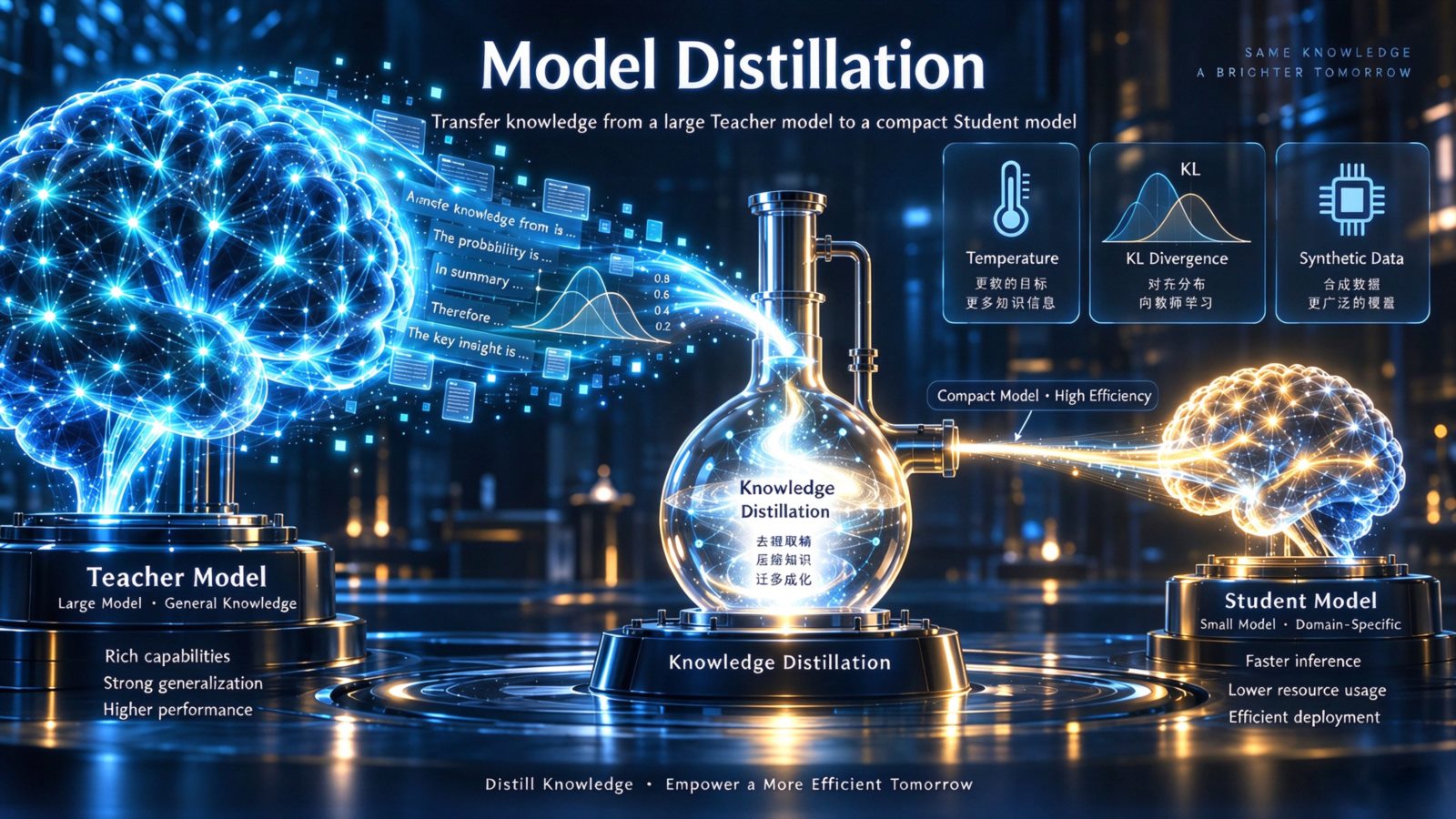
An unprecedented act of self‑distillation is underway.
How One Training Data Point Makes Its Way Into a Model
In the first half of 2026, a startup offering large‑model API access held partnership talks with a top cloud vendor. The startup sought discounted API rates; the cloud provider agreed, on condition of capturing user interaction data generated during model usage.
Founders ran the numbers: even giving every user 100 RMB worth of free API credits would remain profitable, so long as they could accumulate high‑quality datasets to resell to model developers. Around the same time, a leading AI‑data firm also extended an acquisition offer to the startup.
User interaction trajectories captured during task completion have become among the most prized training materials. A team member at an internet company noted that the highest‑priority demand lies in coding and general workplace‑task data.
Coding datasets serve two purposes: solving benchmark problems to score highly on leaderboards, or learning real‑world workflows such as game development and 3D‑model construction. Industry sources reveal that at peak demand, some model builders spend over 10 million USD daily on coding‑related data.
Workplace‑task datasets recreate genuine office workflows: sourcing materials from documents, interpreting requirements and deadlines in emails, populating spreadsheets, editing files, querying web pages and databases, and invoking external tools. According to the founder of a data‑services firm, finance and legal work carry high commercial value. Many tasks are completed online and delivered as Office files, making them ideal training scenarios.
“Using real‑world references, we generated synthetic examples covering tasks, contextual environments, step‑by‑step operations and grading standards. These are not deliverables from any real‑world corporation. The sample prompts went through three full revisions.”
Take leveraged‑buyout (LBO) spreadsheets as an example. These help investment funds assess whether an acquisition makes financial sense: what price to offer, how to structure debt and schedule repayments. Preparing training data for this task requires far more than feeding a pre‑built spreadsheet to the model.
M&A specialists furnish complete financial models, investment reports and source materials: profiles of acquiring and target firms, operational metrics of the target, industry reports, borrowing terms and acquisition contractual clauses. For a beverage‑company case study, operational data includes profit margins, distributor rebates, sales volumes and raw‑material costs.
Experts reconstruct the full workflow: reviewing emails to confirm purchase price and return‑on‑investment targets; cross‑checking financial statements, profit figures and rebate expenses; forecasting revenues and costs from sales and commodity prices; populating spreadsheets to compute debt principal, interest payments and amortization; adjusting valuation and business assumptions to compare investment returns, and delivering final recommendations. Every step must document source materials, actions taken and underlying rationale.
Specialists also compile grading checklists: which steps are mandatory, which constitute bonus points, and which errors render the entire submission unacceptable.
A second expert performs cross‑validation. When the model attempts the task, both experts score outputs against the identical rubric. Scores must align closely; otherwise evaluation criteria get revised. Prompts that the model can solve flawlessly are filtered out.
Task‑related emails, raw source materials, reference spreadsheets and reports, step‑by‑step operational logs, plus grading checklists collectively constitute one complete training sample.
The great challenge lies in faithfully recreating real‑world work. Data‑service providers note that reports evolve iteratively; new materials and revised requirements emerge mid‑project. Some revisions stem from email threads and chat histories, others purely from undocumented expert intuition.
If you feed only the final finished report as prompt material, you first have to reconstruct the original context and constraints. When information is incomplete, poor model performance may not reflect limited capability. If you hand over every piece of context upfront, the model never learns to adapt to shifting requirements.
“Demand is highest for open‑ended tasks mirroring real‑world jobs with no single correct answer,” one provider explained. Given identical source materials, different professionals produce divergent analyses — and models still struggle with these scenarios. Datasets for math and physics with definitive ground‑truth answers remain useful for probing upper performance limits, “but they command far lower prices.”
Expert‑sourced Data Costs Hundreds to Tens of Thousands per Entry, Then Mass‑Expanded via Models
Each manually‑annotated data sample sells for hundreds to tens of thousands of RMB, with typical bulk orders starting at 1,000 entries. Overseas pricing follows similar magnitudes but denominated in US dollars.
Task complexity drives price levels. A complete due‑diligence case study from an investment house — including investment memos, financial models and target‑company operating data — can sell for 50,000 RMB. Datasets for niche domains such as nuclear physics and chip design are extremely scarce and get snapped up immediately upon release.
An industry source close to Moonshot AI disclosed that when training its K3 model, the firm purchased electronic‑design‑automation (EDA) datasets for chip design overseas at a cost of “roughly several million US dollars”. K3’s technical documentation references these exploratory efforts, though official communications frame them as early proof‑of‑concept showing simulation outputs.
Data production was far less specialized in earlier days. During ByteDance’s initial large‑model‑training phase, staff were reassigned from content‑moderation teams. Full‑time employees were paid for writing training samples after hours, in an informal internal crowdsourcing scheme.
A member of Seed’s post‑training team described how employees wrote multi‑turn dialogues for CatBox, an AI companion product. Each user utterance paired with a model reply counts as one dialogue turn. Long samples run 100‑200 turns, earning contributors upwards of 1,000 RMB upon review approval. Participants included screenwriters, literary creators, content moderators and editors. “Some individuals earned over 10,000 RMB a month.”
Today ByteDance recruits domain specialists through its Xpert platform. The Seed STEM Scientist Program has brought on board one hundred scholars cutting‑edge science disciplines. Independent data startups have also built marketplaces where industry professionals codify hands‑on expertise into structured datasets.
Mercor once spent more than 500,000 USD hiring finance, legal, healthcare and management‑consulting experts to develop 200 distinct tasks, averaging over 2,500 USD per assignment. Contributors include former employees from Goldman Sachs, JPMorgan Chase and McKinsey. Surge AI maintains an expert advisory board of over 400 subject‑matter specialists.
Humanlaya, a Chinese expert‑data marketplace, aggregates more than 100,000 specialists spanning roughly 300 industries and academic fields. It secured investment from Hillhouse, Sequoia China and Capital Today in 2026, reaching a valuation approaching 1 billion USD.
A legal professional moonlighting for one AI‑data platform shared that she delivers roughly 40 samples monthly for about 20,000 RMB total, averaging around 600 RMB apiece. Her first entry took 75 minutes; experienced submissions take approximately 30 minutes.
Expert credentials do not guarantee high‑quality datasets. Many professors do not conduct hands‑on lab work and cannot realistically replicate day‑to‑day graduate‑student experimental workflows. Platforms therefore employ full‑time staff with both domain knowledge and algorithmic literacy to audit submissions and identify reusable prompt templates. Out of ten expert‑submitted workflows, suppose five can be adapted with revised materials and constraints; algorithm teams then expand these five into batches of 50 or even 500 samples.
Some firms rely heavily on synthetic data generation. More than half of UniPat’s workforce are large‑model researchers. The company builds its own models, develops evaluation benchmarks, and conducts joint research alongside large tech firms to anticipate market needs and pre‑emptively generate datasets.
Even mass‑produced data quickly becomes obsolete. One major enterprise ordered datasets teaching models to debug faulty code. Before delivery completed, models elsewhere had already learned that capability from alternative corpora. Updates to task‑execution systems can also simplify code‑repair workflows, devaluing the purchased dataset.
Still, buyers can always be found. Service providers note that beyond major tech groups and leading startups, clients include Xiaohongshu, miHoYo, JD.com, NineQuant and Ant Group. Teams progress at uneven paces; datasets discarded by advanced players can still prove valuable for less‑mature research groups.
Grey‑market transactions also persist. Some startups accumulate large volumes of model‑vendor API accounts, resell API access, and traffic the interaction data generated from those calls. Other brokers source datasets from insiders at AI companies for resale to competitors. Insiders in algorithm, engineering, infrastructure or procurement roles may facilitate these deals. Kickbacks underpin many contracts, with individual deals reaching several million or even tens of millions of RMB, split among insiders.
“It feels like picking up free money every day,” one data vendor commented.
Big Tech Pays Premiums for Exclusive Data, Yet Buyers Must Define Their Own Requirements
Model enterprises cannot realistically generate all required datasets in‑house.
A Moonshot AI researcher explained that coding tasks span bug‑fixing, feature development, test‑case writing, code refactoring and performance optimization. Early on, the team lacked experience prioritizing tasks, setting up execution environments and validating outputs. “Lots of our early datasets were hastily assembled by interns and quite low‑quality.”
When building its code‑focused command‑line product, the company tried internal dogfooding to gather feedback, yet fewer than 50 staff members could make meaningful use of the tool. Even opened to paying customers, high‑quality samples remained scarce. A product manager for a large‑enterprise office‑Agent product at a major tech firm observed that production models are not always state‑of‑the‑art, and end‑user tasks are often uncomplicated. “Sometimes you get only a handful of usable entries out of tens of thousands.” Concerns over work‑document privacy also impose strict constraints on data usage.
Simply hiring additional personnel to fill gaps proves equally difficult. When superior external models emerge, teams tend to leverage their outputs to train domestic models, reducing demand for manual annotation. Once distillation yields diminishing returns, human‑annotation requirements surge again.
Estimates from an independent model‑developer suggest peak‑period data‑production staffing could hit 6,000 workers, dropping below 2,000 during low‑demand phases. Model companies with total headcounts in the hundreds cannot afford to permanently maintain such large annotation teams.
External vendors often sell identical datasets to multiple customers. Major Chinese tech firms, however, frequently pay a 3‑4x price premium to secure perpetual or time‑bound exclusive rights. Datasets valid today may retain merely 10 % of their value six months later. By the time competitors gain access, much of the utility has eroded.
Beyond budget, purchasers must clearly articulate their exact requirements.
When Ant Group procured financial datasets, one investment‑research report requirement was broken down into hundreds of individual cases across more than ten sub‑categories, with explicit specifications for volume and case characteristics for each subclass. “Projects for Ant often operate at a loss for us,” a vendor stated, as granular specifications raise delivery complexity.
Acceptance reviews prioritize compliance first, then quality. ByteDance, for instance, explicitly prohibits distilling or leveraging illicit APIs. Buyers typically read samples line‑by‑line, assessing analytical depth, checking input‑file corruption and filtering blank documents. The CEO of one model‑building firm once asked a vendor: “If there is an extra space in a filename that is not referenced in the prompt, will that introduce bugs during model training?”
Another validation approach is training test runs to observe benchmark‑score improvements. If metrics show no gain, buyers generally decline further procurement.
Moonshot AI turned down a proposal for deep exclusive‑partnership terms from Surge AI. Insiders said the firm worried that as vendors scale up, their deliverables shift toward generic tasks, making sustained delivery of niche, long‑tail datasets unlikely.
“Saying no is only feasible if you know exactly what you need and possess strong data literacy and taste. That is where competitive gaps open up,” one data vendor pointed out.
The Very People Training Models Are Preparing to Hand Over Their Own Work to AI
At DeepSeek, most employees work on data‑related responsibilities. “Liang Wenfeng occasionally participates in manual data labelling,” according to a DeepSeek insider. After taking charge of Hunyuan, Yao Shunyu cleaned existing datasets and overhauled infrastructure, enabling Hunyuan 3 Preview to substantially outperform prior iterations. Further refinements to training corpora and expanded reinforcement‑learning scale in the official release yielded additional capability gains.
Even so, compensation for data‑production staff does not necessarily rise alongside model performance. A researcher at a leading internet company described a team that generated 10,000 high‑impact training samples. Many contributors earned only 8,000‑9,000 RMB monthly; under an 18‑salary package, their annual pay stayed below 200,000 RMB. By contrast, algorithm specialists within the same firm receive total annual compensation packages around 10 million RMB. When model performance improves, rewards flow mainly to algorithm teams; pay barely varies regardless of how well data work is executed.
Even highly‑credentialed algorithm researchers now devote huge portions of their time cleaning samples, tuning data‑mix ratios, and drafting grading rubrics.
This diverges from their early‑career expectations. When large‑language models first rose to prominence, researchers chased novel algorithms and architectural innovations. After OpenAI released o1 in September 2024 and DeepSeek launched R1 in January 2025, reinforcement‑learning enabled models to iteratively adjust problem‑solving strategies guided by reward signals. Given verifiable answers in mathematics and testable outputs in coding, researchers hoped models would transfer this reasoning capability to other domains.
Evaluating quality for tasks such as report‑writing and customer‑email correspondence is far less straightforward. Models may game reward functions: fabricating superficially plausible reasoning traces to fool scoring models. Researchers are forced to circle back, revising datasets, adjusting reward rules and patching vulnerabilities.
Competitive pressure also compresses timelines. Post‑training teams across multiple companies push new model releases every one or two months over the past year. Researchers work from 10:30 a.m. deep into the night, bringing laptops even on vacation.
“Fundamentally, firms cannot create generational gaps in technical approaches, data processing or quality control. It all comes down to shipping first,” one post‑training researcher said. “Many efforts become meaningless if delayed two or three months.”
To keep pace, researchers direct models to bulk‑collect and revise datasets, leveraging stronger models to audit outputs while humans oversee workflows and resolve edge‑case issues. As models grow more capable, they absorb more workflow steps, accelerating subsequent training cycles.
In 2026, OpenAI published an article detailing internal R&D shifts, noting that coding agents have become deeply integrated into researchers’ daily routines: writing experimental code, executing test suites, and diagnosing infrastructure failures.
Anthropic has disclosed similar working patterns. Once, a routine upgrade crashed tens of thousands of training jobs. Engineers fed fault logs and cluster access permissions to Claude. The model systematically tested environment configurations, pinpointed the problematic debug toggle, reproduced the failure and validated fixes. Work that would normally occupy human engineers two‑to‑three days was completed by the model in roughly two hours. One engineer described his experience as “managing multiple Claude instances all competing for my attention.”
Researchers distill domain specialists’ knowledge, experience and judgment into datasets to train models to take over human jobs. Now, models are learning to perform the very work those researchers carry out day‑to‑day.




暂无评论内容